
News & Updates
Social Policy in Lebanon Between Welfare and Warfare: Civil Society and Expert Engagement and Exchange Towards Social Justice in Lebanon | Roundtable #1- Repeated Exposures: Childhood and War in Lebanon
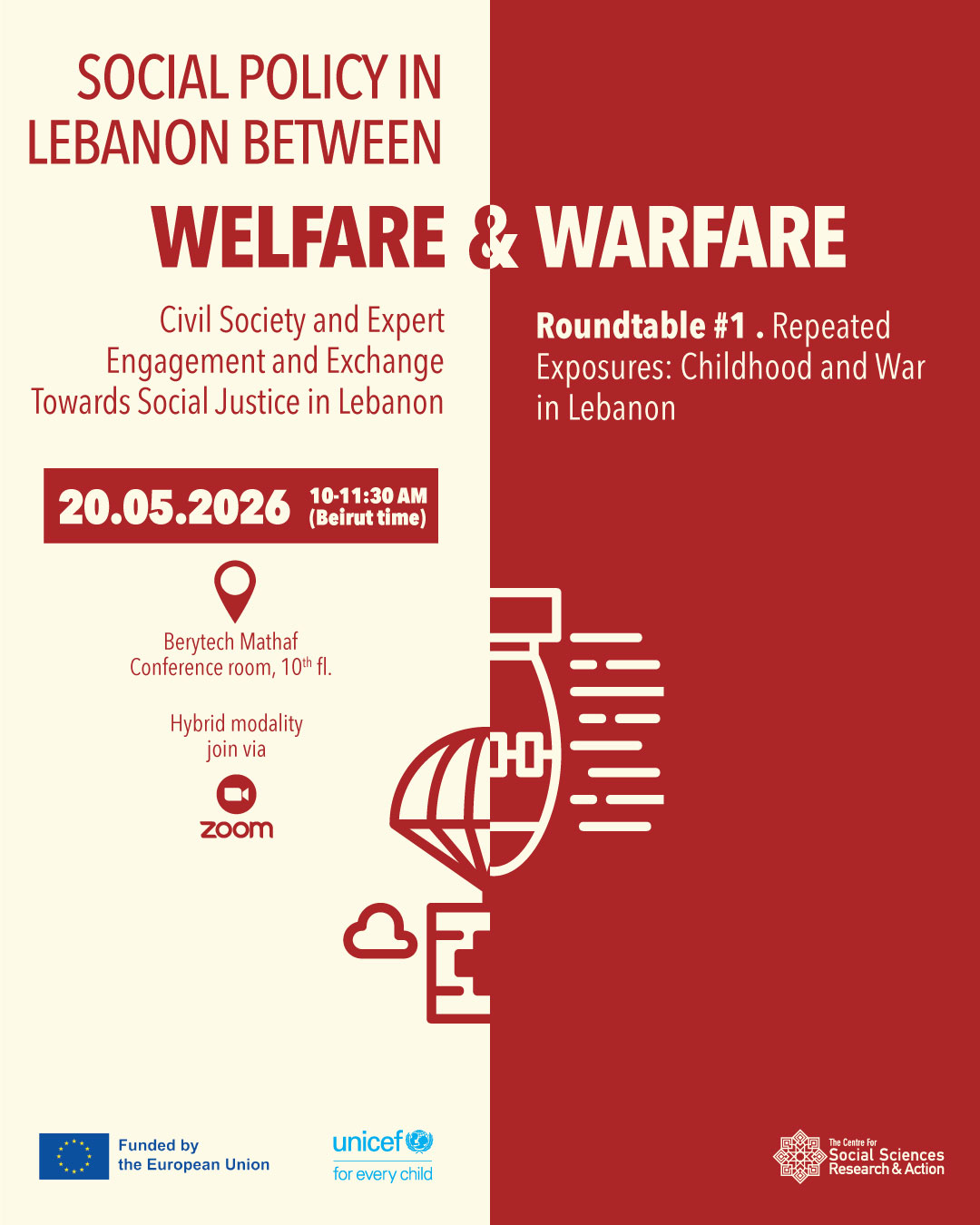
Social Policy in Lebanon Between Welfare and Warfare: Civil Society and Expert Engagement and Exchange Towards Social Justice in Lebanon
Roundtable #1- Repeated Exposures: Childhood and War in Lebanon
Around the world, the lives of children are reshaped by the accelerated technological transformations, by the demographic shifts, and by climate disruptions. Facing these global trends, the future of children depends on national policies to ensure child protection and better access to health and education. In this rapidly changing environment, conflicts and wars represent a cross-cutting factor.
In Lebanon, the 2023-24 war with Israel displaced over 1 million people and disrupted schooling, health care, and water supply systems. A UNICEF survey conducted in February 2025 found that, post-conflict, “over one-quarter of households had children out of school”, and particularly in Eastern Lebanon, “31% of households report insufficient access to safe drinking water”. Following the ongoing war since March 2026, children were once again among the most affected: nearly 600 have been killed or injured in under six weeks, while over a million people are displaced, with children comprising up to 40% of those forced to flee. More than 150,000 students have seen their education disrupted due to school closures or the transformation of public schools into shelters. These immediate impacts intersect with a longer trajectory of economic collapse, failing infrastructure, and the chronic absence of state-led investment in child well-being, from education to recreational and psychosocial spaces.
Repeated wars and systemic neglect in the country have shaped successive generations, raising central questions about the cumulative effects of continuous exposure to crisis on children’s development. Today’s parents are themselves the product of earlier cycles of violence, carrying unresolved trauma that structures family life, expectations, and coping mechanisms. Through this intergenerational transmission of trauma, instability becomes normalised, and resilience is demanded rather than socially and politically supported.
What distinguishes the present moment, however, is the nature of the violence observed today: it appears less incidental and more enduring in its effects, seemingly calibrated to leave lasting imprints rather than temporary disruptions. This is evident in the widespread destruction of entire towns and the repeated use of unconventional weapons, such as white phosphorus, whose consequences extend to natural resources and future generations. What kinds of futures are being silently engineered through this repeated and embodied exposure to violence? And how might these repeated exposures shape long-term trajectories, not only for children and their parents, but for the social fabric as a whole?
This rather bleak picture suggests that children’s futures are shaped not only by external shocks but also by how systems respond, particularly through investments in shock-resilient social protection, education, health, child protection, and mental health services.
This roundtable aims to unpack the cumulative impact of repeated exposure to conflict on children in Lebanon. It will examine how cycles of war, economic collapse, and systemic neglect are reshaping children’s lives and futures, ultimately seeking to answer the question: if reducing children’s exposure to conflict and strengthening their resilience are to be central to any national recovery agenda, what path forward can enhance child protection, reverse current trends, and place the next generation at the heart of national priorities?
Speakers:
- Dr. Hala Kerbage, Psychiatrist at the Child and Adolescent Psychiatry Department, Hospital Center University of Montpellier; Regional Center for child and adolescent post-traumatic stress at Saint-Eloi Hospital, Montpellier University Hospital
- Rose Habchi Daher, Head of Resilience Programme at Himaya, Lebanon
- Dr. Peter Luigi Ragno, Chief of Social Protection and Social Policy expert, UNICEF
Moderation: Sobhieh El Najjar
Date: 20 May 2026
Time: 10:00 AM - 11:30 AM (Beirut time)
Location: Berytech Mathaf, conference room, 10th floor.
Kindly RSVP physical attendance by email to contact@socialsciences-centre.org
Hybrid modality, you can register and join via Zoom: https://us06web.zoom.us/webinar/register/WN_w-Jm22bzTA-v1z0gnDvz7g
السياسات الاجتماعية في لبنان بين الحرب والرعاية: تبادل ونقاش مع المجتمع المدني والخبراء نحو العدالة الاجتماعية في لبنان
حلقة النقاش الأولى – التعرُّض المتكرّر للحرب والطفولة في لبنان
في شتّى أنحاء العالم، تشهد حياة الأطفال تحوّلات جذرية تحت وطأة التطوُّرات التكنولوجية المُتسارِعة، والتغييرات الديموغرافية، والاضطرابات المناخية. وفي ظلّ هذه الاتّجاهات العالمية، يصبح مستقبل الأطفال مرهونًا بالسياسات الوطنية التي تكفل حمايتهم/نَّ وتعزيز فُرَص وصولهم/نَّ إلى الصحّة والتعليم. وفي خضمّ هذه التبدُّلات السريعة، تفرض النزاعات والحروب نفسها بوصفها عاملًا بُنيويًا عابرًا يتقاطع مع كلّ هذه الأبعاد.
في لبنان، أسفرت حرب ٢٠٢٣–٢٠٢٤ مع إسرائيل عن نزوح أكثر من مليون شخص، وأدّت إلى تعطُّل التعليم وخدمات الرعاية الصحّية وإمدادات المياه. وفقًا لدراسة استقصائية أجرتها اليونيسف في شباط/فبراير ٢٠٢٥، تَبيَّنَ أنَّه في مرحلة ما بعد النزاع "كانَ لدى أكثر من رُبع الأُسَر أطفالٌ خارج مقاعد الدراسة"، ولا سيّما في شرق لبنان حيث "أفادت ٣١٪ من الأُسَر بعدم كفاية الوصول إلى مياه الشرب الآمنة". ومنذ اندلاع الحرب المستمرّة في آذار/مارس ٢٠٢٦، كانَ الأطفال مجدّدًا في صدارة المتضرّرين/ات: قُتِلَ أو أُصيب نحو ٦٠٠ طفل خلال أقلّ من ستّة أسابيع، في حين تجاوزَ عدد النازحين/ات المليون، ويُشكِّل الأطفال ما يُقارِب ٤٠٪ من مجمل الذين من أُجبِروا على الفرار. كذلك، تعطَّلَ التعليم لدى أكثر من ١٥٠ ألف تلميذ نتيجة إغلاق المدارس أو تحويل المدارس الرسمية إلى مراكز إيواء. وتندرج هذه الانعكاسات المباشرة ضمن مسارٍ أطول من الانهيار الاقتصادي، وتدهور البنى التحتية، والغياب المزمن للاستثمار الحكومي في رفاه الأطفال، بدءًا بالتعليم، مرورًا بالمساحات الترفيهية، وصولًا إلى خدمات الدعم النفسي-الاجتماعي.
إنَّ الحروب المتكرّرة وظاهرة التهميش البُنيوي في البلد قد أثّرت في العديد من الأجيال المتعاقبة، ما يدفعنا إلى طرح أسئلة جوهرية حول الآثار التراكمية للتعرُّض المستمرّ للأزمات على نموّ الأطفال. فالأهل اليوم تعرّضوا سابقًا لجولات من العنف هم/هنَّ أيضًا، ويحملون/لْنَ بالتالي صدمات غير مُعالَجة تُعيد تشكيل الحياة الأُسَرية، والتوقُّعات، وآليات التكيُّف. ومن خلال هذا الانتقال للصدمات من جيلٍ إلى جيل، تصبح حالة عدم الاستقرار واقعًا مألوفًا، ويُطلَب من أفراد المجتمع إظهار القدرة على التكيُّف والصمود بدل أن تُدعَم هذه القدرة اجتماعيًا وسياسيًا.
ولكنَّ ما يُميِّز اللحظة الراهنة هو طبيعة العنف الذي نشهده اليوم: يبدو هذا العنف أقلّ عَرَضيةً وأكثر امتدادًا في تداعياته، وكأنَّه مُصمَّم لإحداث بصمات طويلة الأمد بدل الاضطرابات المؤقّتة. يتجلّى ذلك في التدمير الواسع لبلداتٍ بأكملها، وفي الاستخدام المتكرّر للأسلحة غير التقليدية، مثل الفوسفور الأبيض، التي تُؤثِّر على الموارد الطبيعية وعلى الأجيال المقبلة. فما هي أنواع المسارات المستقبلية التي يجري تشكيلها بصمت عبر هذا التعرُّض المتكرّر والمباشر للعنف؟ وكيف يمكن لهذا التعرُّض المتكرّر أن يُعيد رسم المسارات على المدى البعيد، ليس فقط للأطفال وأهاليهم/نَّ، بل للنسيج الاجتماعي عمومًا؟
تُشير هذه الصورة القاتمة إلى أنَّ مستقبل الأطفال لا يتشكّل بفعل الصدمات الخارجية فحسب، بل يتحدّد أيضًا بكيفية استجابة الأنظمة القائمة، وخصوصًا عبر الاستثمارات في أنظمة حماية اجتماعية تكيّفيّة وقادرة على استيعاب الصدمات والاستجابة لها، وكذلك في قطاعات التعليم والصحّة وحماية الطفل وخدمات الصحّة النفسية.
تهدف حلقة النقاش هذه إلى تحليل الأثر التراكمي للتعرُّض المتكرّر للنزاعات على الأطفال في لبنان، وفهم تأثير جولات الحرب والانهيار الاقتصادي والتهميش البُنيوي على حياة الأطفال ومستقبلهم/نَّ، وذلك للإجابة في نهاية المطاف عن سؤالٍ محوري: إذا أَرَدْنا أن تكون مسألة الحدّ من تعرُّض الأطفال للنزاعات وتعزيز قدرتهم/نَّ على التكيُّف والصمود جزءًا أساسيًا من أيّ خطّة وطنية للتعافي، فما هو المسار الكفيل بتعزيز حماية الطفل، وتغيير الاتّجاهات الراهنة، ووضع الجيل القادم في صميم الأولويات الوطنية؟
المتحدّثون/ات:
- - د. هالة كرباج، طبيبة متخصصة في قسم الطب النفسي للأطفال والمراهقين في المركز الاستشفائي الجامعي في مونبلييه؛ والمركز الإقليمي لاضطرابات ما بعد الصدمة لدى الأطفال والمراهقين في مستشفى سانت إلوا، التابع للمستشفى الجامعي في مونبلييه.
- - روز حبشي ضاهر، مديرة برنامج الحصانة والمرونة في منظّمة "حماية"، لبنان
- - د. بيتر لويجي راغنو، رئيس قسم الحماية الاجتماعية وخبير السياسات الاجتماعية، اليونيسف
إدارة الجلسة: صبحيّة النجّار
التاريخ: ٢٠ أيّار/مايو ٢٠٢٦
الوقت: ١٠:٠٠ صباحًا – ١١:٣٠ صباحًا (بتوقيت بيروت)
المكان: مبنى بيريتيك – المتحف، قاعة المؤتمرات، الطابق العاشر
الرجاء تأكيد الحضور عبر البريد الالكتروني إلى:
contact@socialsciences-centre.org
أو الحضور عبر الإنترنت، يمكنكم/نَّ الانضمام عبر زووم:
https://us06web.zoom.us/webinar/register/WN_w-Jm22bzTA-v1z0gnDvz7g




Cyprus • Lebanon